How Marketing Reorganizes for the Agentic Age
A modern marketing operating model needs when agents do the production. A walk through the brand code, the four-layer platform, the five workstreams, and the role shift.

Marketing has become the bottleneck inside the enterprise. Not because marketers got slower—because everyone else got faster. The operating model marketing inherited from the 2010s was built for a world where production cycles took weeks, channels were countable, and the brief survived contact with execution. None of those conditions hold anymore.
Michelle Taite “proposes a redesign”. The framework names parts of the problem the field has been gesturing at without specifics.
The brand code
The center of the framework is something the article calls the brand code: a machine-readable codification of brand strategy, product detail, customer insight, and business rules that agents can read directly inside a workflow.
That definition is doing more work than it looks. The brand code is not a content management system, not a prompt library, not a tone-of-voice guide. It is the operating model itself, made structured. Strategy in machine-readable form. Decision logic, captured. Customer insight, encoded.
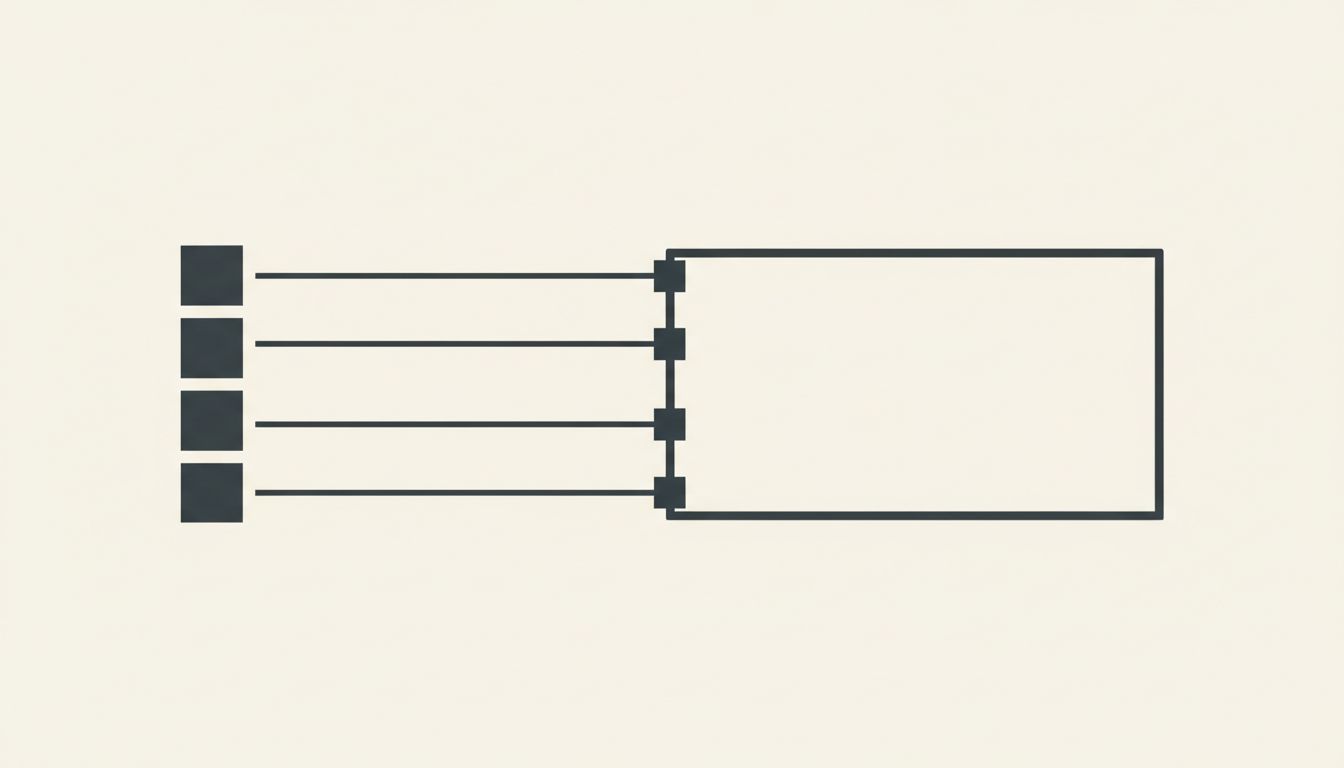
Without it, generative AI produces faster output that drifts further from the brand each iteration. With it, agents and people work from a shared substrate. The brand code is what makes “let agents do the production” a sentence with a subject.
The four-layer platform
Around the brand code, the article describes a four-layer agentic platform.
- Foundation. The data, taxonomies, and rules that ground every agent decision.
- Execution. The agents that produce and adapt content, tests, and reports.
- Orchestration. The workflows that sequence agent work and route handoffs.
- Interface. How marketers direct, review, and intervene.

Each layer answers a different question. Foundation: what does the system know? Execution: what can it do? Orchestration: in what order? Interface: where does a human shape the work?
The framing has a clean separation that real implementations rarely preserve. Most enterprises will end up with overlapping systems. The layers are still useful as a checklist—every agentic marketing program needs all four, and most early efforts under-build at least one of them.
The five workstreams
The article also reorganizes marketing’s day-to-day into five coordinated workstreams.
- Intelligence and ideation. Agents synthesize market signals, competitive intelligence, and audience behavior into prioritized opportunities and briefs.
- Content creation. Agents generate and adapt content across formats, channels, and segments, working from the brand code.
- Research and testing. Agents design and run experiments continuously, using real or synthetic audiences.
- Distribution. Agents adapt, schedule, and deploy across channels and segments.
- Performance and reporting. Agents monitor continuously, flag anomalies, and feed learnings back into the system in near real time.

Notice what each workstream has in common. The work is continuous, not episodic. The agent’s role is execution and synthesis at scale. The human’s role gets set up earlier than it used to—defining the strategic intent, the standards, the learning agenda—and shows up later as direction, not production.
From producers to directors of work
A marketer in this model is not the person who writes the brief, sketches the campaign, or drafts the copy. The marketer sets the standards the brief is generated against, defines what good looks like in context, decides what’s worth testing, and intervenes when the system needs a course correction. The article calls this becoming “directors of work.”

That phrasing is precise, and the precision matters. Director is a different job than producer. Producers improve through reps. Directors improve through judgment—through being able to recognize quality in context and translate that recognition into changes the system can carry forward.
Many marketers have built careers on craft. On knowing the deck is good, the campaign is on-brief, the line lands. The transition to direction is not an additive skill. It is a different identity. Some will make it. Some will not. Boards and CMOs that treat the transition as training rather than reorganization will be disappointed.
What’s hard
The framework has clean lines. The implementations won’t.
The brand code itself is a substantial artifact. The company that has never written down its decision rules will discover, on day one, that there was less consensus than anyone admitted. The four-layer separation is a logical model, not an architectural one. Most enterprises will end up with overlapping systems and unclear ownership. And the role transition from producer to director creates real losses, not only in headcount but in tacit knowledge that nobody can codify in time.
None of that invalidates the framework. It does mean treating the redesign as an executive program, not a marketing initiative.
Why marketing first
The article positions marketing as the canary. That seems right. Channel proliferation, campaign volume, and the pace mismatch with engineering all compound there earliest.
But every function with cross-functional handoffs and codifiable decision logic—sales, support, supply chain operations, finance close, regulatory operations—has a brand code of its own waiting to be made explicit. Marketing is the function being forced to write it down first.
What the article shows, more than anything, is how much codification was always implicit. Strategy, rules, and customer insight have always been the operating system. The agentic age is the moment that operating system has to become legible—to agents, and to the people who direct them.